



Castor oil for hair: strengthen, nourish and how to use it

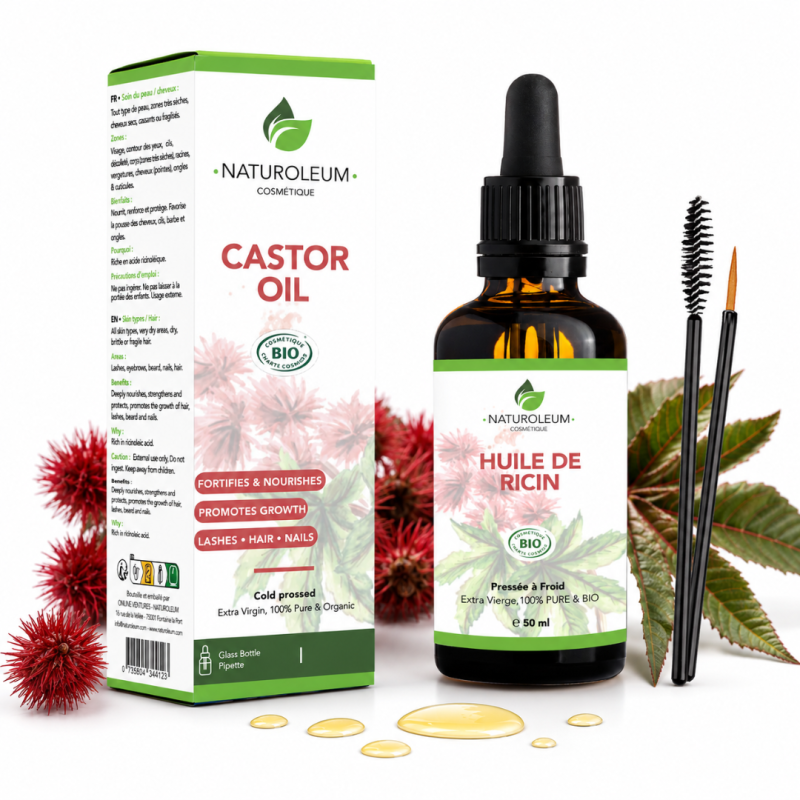
Castor oil strengthens hair, limits breakage and repairs the look of damaged ends: used once a week as an oil bath mixed with a lighter oil, it leaves hair stronger, shinier and visibly thicker within a few weeks. Choose an organic, cold-pressed one, like our organic castor oil, COSMOS Organic certified by Ecocert.
Fine, brittle, dull or dry hair after summer? Castor oil is nature's most coating hair treatment. Here is how to use it without weighing hair down, how often, and what to expect. For its other uses (lashes, beard, nails), read our complete guide to castor oil.
Why hair loves castor oil
Pressed from the seeds of Ricinus communis (INCI: Ricinus Communis Seed Oil), castor oil contains around 90% ricinoleic acid, a rare fatty acid that gives it its thick texture and coating power. It wraps the hair fibre, locks in moisture and smooths the cuticle.
- Stronger hair: the fibre is coated, so hair breaks less when brushed.
- Repaired-looking ends: dry, damaged lengths feel soft and supple again.
- Shine: a smoother cuticle reflects light better.
- Fuller look: stronger, less broken hair looks thicker.
→ Discover our organic castor oil: from India, cold-pressed, 100% pure, in 50, 100 or 200 ml glass bottles.
The castor oil hair bath in 5 steps
- Mix 1 tablespoon of castor oil with 1 tablespoon of organic jojoba oil (fine hair) or organic argan oil (dry hair). Warm the bottle in your hands.
- Massage your scalp for 3 to 5 minutes with your fingertips, section by section.
- Comb through the lengths, focusing on the ends.
- Leave on for 1 to 2 hours under a warm towel, or overnight.
- Wash twice with a mild shampoo, lathering the first one on dry hair: that is the trick to remove it all.
Very dry ends? Between two oil baths, smooth one drop of the blend onto slightly damp ends.
How often?
| Your goal | How often | Suggested blend |
|---|---|---|
| Stronger hair, less breakage | Once a week | Castor + jojoba |
| Very dry or damaged hair | 1 to 2 times a week | Castor + argan |
| Dry ends | 1 drop between oil baths | Castor + argan |
| Daily use on the whole scalp | Avoid | Too rich, weighs hair down |
What results to expect, and when?
- From the first use: softer, shinier hair.
- After 3 to 4 weeks: fewer broken hairs in your brush, suppler ends.
- After 6 to 8 weeks: stronger, visibly fuller hair.
Consistency is everything: one oil bath a week beats one heavy application a month.
The stronger-hair trio
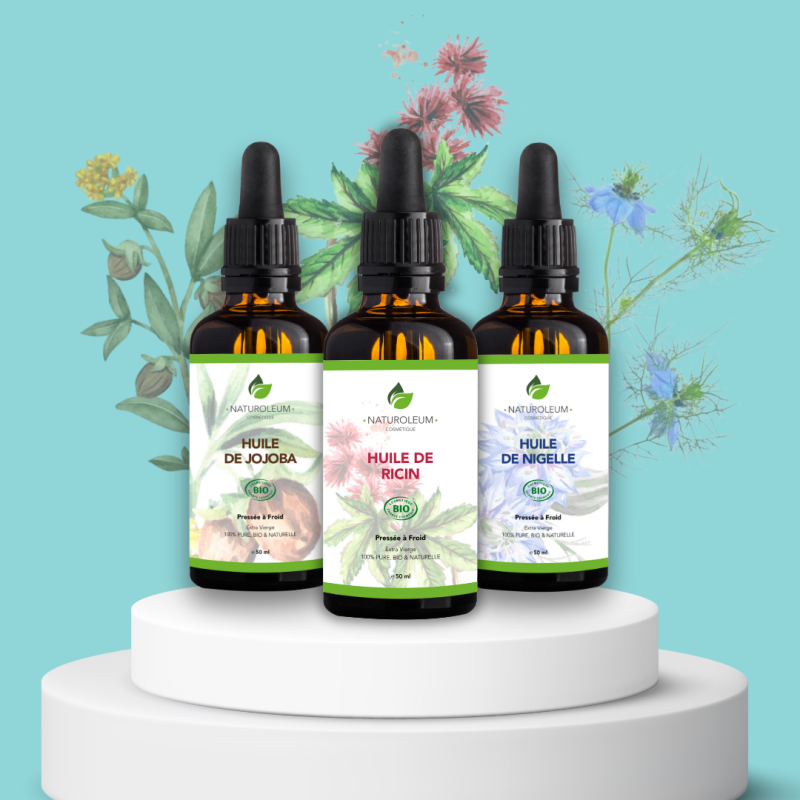
To go further, pair castor oil with organic black seed oil, which strengthens hair and adds shine, and jojoba oil, which lightens the blend. That is exactly our Stronger Hair Pack (castor, black seed and jojoba).
Dry rather than fine hair? Compare with avocado oil in castor oil or avocado oil for dry hair.
Precautions
- Do a patch test in the crook of your elbow 24 hours before first use.
- Always dilute castor oil for hair: neat, it is hard to rinse out.
- For external use. Avoid contact with the eyes. During pregnancy and for children, ask a health professional first.
- If your scalp is irritated or you are losing a lot of hair, see a doctor or dermatologist.
Our hair oils
Our castor, black seed, jojoba and argan oils are organic, COSMOS Organic certified by Ecocert, cold-pressed and 100% pure, bottled in France by an ESAT in glass bottles. They keep for 12 months after opening. Build your ritual: 10% off from 2 oils, 15% off from 3 oils in your basket. See also our oils for stronger hair.
FAQ
Does castor oil make hair grow?
It does not act on hair growth itself. It strengthens the fibre and limits breakage, so hair keeps its length and looks thicker.
Can I leave castor oil in overnight?
Yes, as long as you mix it with a lighter oil and protect your pillow with a towel.
How do I wash castor oil out?
Apply shampoo to dry hair, lather, rinse, then shampoo a second time.
Is it suitable for curly and coily hair?
Yes, it is one of their best allies: it nourishes dry lengths and helps define curls.
Which castor oil should I choose?
An organic, cold-pressed, 100% pure oil in a glass bottle, like our organic castor oil.
Comments : 0