



Massage oil: benefits, techniques and tips for choosing the right one

A good massage comes down to two things: slow movements and an oil that glides without feeling sticky. Store-bought massage oils are often perfumed blends or mineral oils. A pure, organic, cold-pressed plant oil does the same job while nourishing the skin during the massage.
In this guide, you will learn which oil to choose for your skin and the type of massage, which movements to use and how to build a relaxing routine at home.
Why massage with a plant oil?
Oil reduces friction: hands glide, pressure stays even and the massage remains pleasant from start to finish. A plant oil also provides fatty acids and vitamin E, which nourish the skin and help keep it supple.
Cold-pressed oil keeps these nutrients, which the heat of refining partly destroys. Certified organic, it comes from crops grown without synthetic pesticides, which matters for a product applied to the whole body. Finally, a pure oil contains no added fragrance or preservatives: a good choice for sensitive skin.
Which plant oil should you choose for a massage?
The right oil depends on two things: your skin type and the length of the massage. An oil that absorbs slowly suits long body massages; an oil that absorbs quickly suits the face and short massages.
| Oil | Texture | Best for |
|---|---|---|
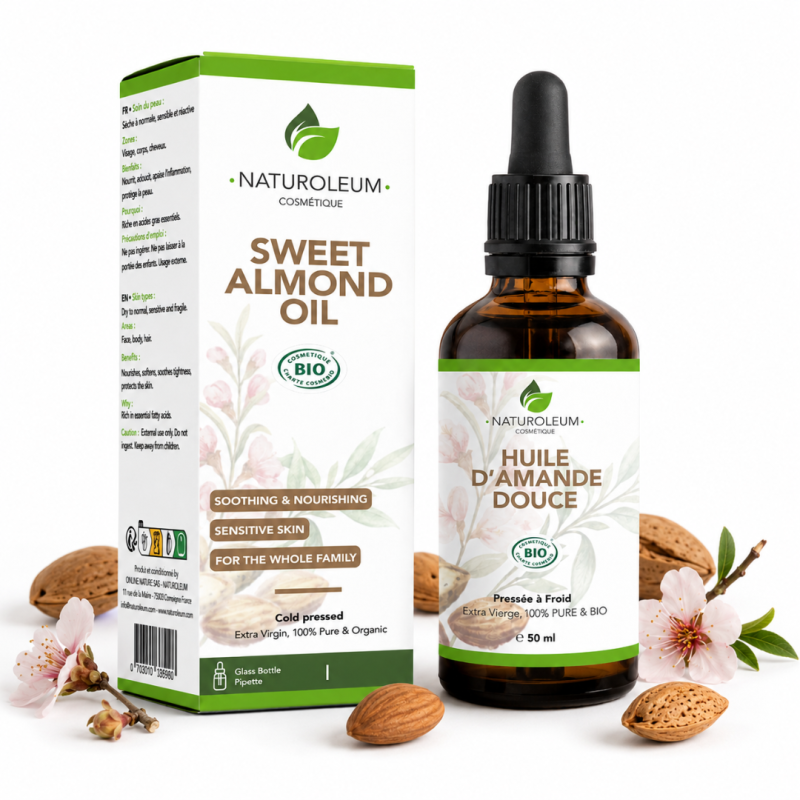
| Organic sweet almond oil | Long glide, soft feel | Body massage, sensitive skin, babies: the classic massage oil |
| Organic jojoba oil | Light, non-greasy | Face, combination to oily skin, short massages |
| Organic avocado oil | Rich and smooth | Very dry skin, legs, rough areas |
| Organic argan oil | Satin finish | Body and face massage, dry or mature skin |
| Organic hemp oil | Fine, absorbs quickly | Oily or sensitive skin, back massage |
Our tip: for a first purchase, organic sweet almond oil is the most versatile. For a drier feel, mix it half and half with organic jojoba oil: the blend glides well and leaves the skin less greasy after the massage.
For a full-body massage, allow about one tablespoon of oil. It is better to add more along the way than to use too much at the start.
Basic massage movements
Four movements are enough for a relaxing massage at home:
- Effleurage: long, slow strokes with flat hands to spread the oil and relax. Always start and finish with it.
- Kneading: gently grasp the muscle between your fingers and thumb, like dough, on the shoulders, calves or thighs.
- Gliding pressure: press with the palm or thumbs while moving slowly upwards, for example along the back on each side of the spine, never on the spine itself.
- Circular movements: small circles with the fingertips on tense areas, such as the neck or the soles of the feet.
Always keep one hand in contact with the skin, and preferably work towards the heart on the arms and legs.
A 15-minute relaxing routine
- Prepare a warm, quiet room, a towel and your oil, warmed for a few seconds between your hands.
- Back and shoulders (5 min): effleurage, then kneading of the trapezius muscles and gliding pressure along the back.
- Neck (3 min): small circles at the base of the skull, then smoothing towards the shoulders.
- Legs (4 min): effleurage from ankles to thighs, then kneading of the calves.
- Feet (3 min): thumb pressure over the whole arch of the foot.
Finish with a few very slow strokes on the back. Let the oil absorb for a few minutes before getting dressed.
For the face, a light oil such as jojoba and a tool like the gua sha extend this moment of relaxation.
Precautions
- Do a patch test 24 hours beforehand on a small area, in the crook of the elbow, especially with a new oil.
- Avoid sweet almond oil if you are allergic to tree nuts.
- Do not massage irritated, broken or sunburnt skin.
- During pregnancy, use gentle movements and ask your midwife or doctor for advice.
- Store the oil away from light and heat, and use it within 12 months of opening.
A relaxing massage does not replace medical care: if pain persists, consult a health professional.
Frequently asked questions
What is the best natural massage oil?
Organic sweet almond oil is the most widely used: it glides for a long time, suits most skin types and can be used from a very young age.
Can you use any plant oil for massage?
Yes, as long as it is intended for cosmetic use and of good quality, ideally organic and cold-pressed. Choose its texture according to the area and length of the massage.
Should you add essential oils?
It is not necessary. A plant oil alone is enough and suits more people, including pregnant women and children, for whom essential oils require precautions.
Does massage oil stain sheets?
A plant oil can leave marks on fabric. Place a towel under the person being massaged and let the oil absorb before getting dressed.
Which oil should you use to massage oily skin?
Light oils such as jojoba or hemp absorb quickly and leave little greasy film.
In summary
For massage, choose a pure organic plant oil: sweet almond for the body, jojoba for the face and oily skin, avocado or argan for dry skin. A few simple movements are enough for a real moment of relaxation at home. Discover our organic plant oils.
Comments : 0